Friday, April 2, 2010

“Clean Fill Not Wanted - Pleasures of Gardening in a Bog”


Member Freeman Patterson will be speaking on the topic “Clean Fill Not Wanted - Pleasures of Gardening in a Bog” 7:00 pm, Wednesday April 7th, 2010 during Fundy Gardeners regular monthly meeting.

Freeman’s other passion is gardening naturally. Freeman’s home in Shamper’s Bluff is an ecological reserve with a bog garden and a woodland gardens.

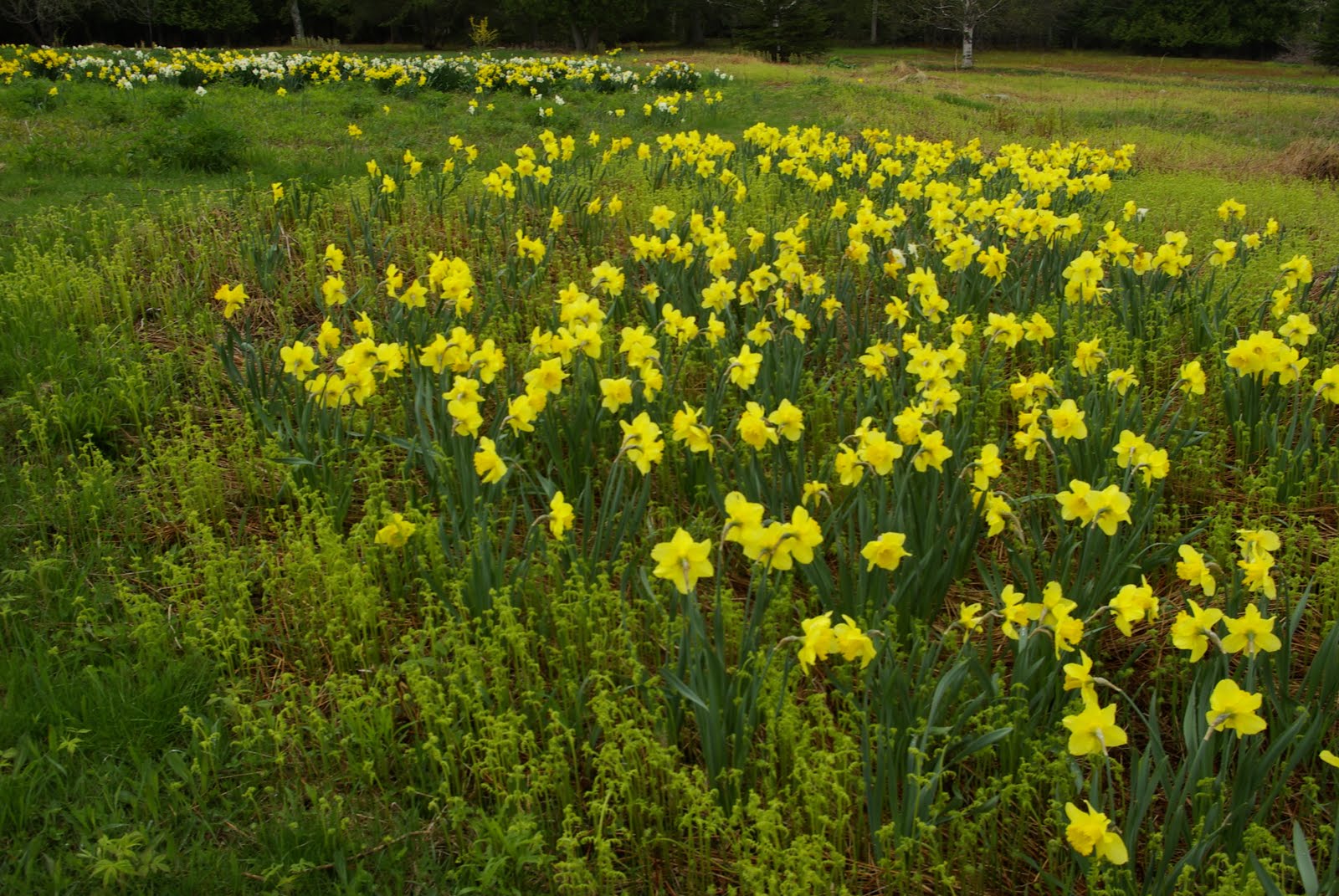
In the fields in front of this home he has planted hundreds of daffodils which signal spring each year. You can walk along the woodland trails or wander through the many paths that have been mowed throughout the fields of his property.

Freeman is a Professional-acclaimed Master Photographer. He uses rich colours and technical skills when photographing nature.


Freeman Patterson is also
author and co author of numerous photography books.


Friday, March 26, 2010

Hampton's Community Garden !

Hampton now has a Community Garden !


‘How to plant a vegetable garden?’

‘How to plant a vegetable garden?’

You are invited to hear Dick Chiswell, a well know local gardener and Fundy Gardener Member

-will give you some answers on planting and growing a vegetable garden

Saturday, April 24th 2:00 - 3:00pm.
At West Branch Library
Lancaster Mall
621 Fairville Blvd.
Saint John


Tuesday, March 16, 2010

Capt.. Richard (Dick) Steele

A sad period in the gardening world hearing that Capt.. Richard (Dick) Steele passed away on  March 14,2010 after a short illness. Dick was a premier breeder of rhododendrons and magnolias as well as a skilled plantsman, propagator.He was in his early 90s but looked and acted about  30 years younger.

Along with his daughter Diana Steele, , they operated the garden centre at Bayport Plant Farm in Bayport Nova Scotia (near Lunenburg). To visit the garden centre and listen his enthuasm about plants and his yearly expeditions to Labrador and Northern Newfoundland  on plant hunting trips to was a real treat.
His door was always open to vistors (just call ahead) and would welcome you with a tour and a cup of tea                                                                                                             
                                                                                                    
He was a guest speaker to the Fundy Garden club in October 2007 and delighted the members with his plant knowledge,wit and charm. One member questioned  him on what to do with the deer. With a direct approach he told the member to shoot them.

Capt. Steele was a great man and he will be sorely missed
  
                                                                      Touring  the Kennedy-Steele Park in Rothesay  Oct. 2007

Jodi DeLong of Canning, Nova Scotia, Canada
writes in her blog about the Capt.


Remember Jodi she spoke to the club on container
plants Spillers,Thrillers and Fllers for containers. 


Sunday, March 7, 2010

Charlotte County Blooms

Charlotte County Blooms 
     May 1,2010 9am-2 pm

The premiere season event kicking off the arrival of a new season.
The guest speakers presenting  Master Gardeners

Marjorie Peronto of University of Maine

Deb Sheids -A graduate of the Master Gardening programn offered by the University of Maine Cooperative Extension.

Plus a great lunch.

Wednesday, February 24, 2010

Honeyberries

A member was asking about Honeyberries aka Haskap


Haskap is an amazingly hardy, fast growing, high yielding, great tasting berry bush that is relatively new to North America. It is an edible honeysuckle that originates from Siberia and can be found in Russia, China, and Japan. It goes by the name ‘Honeyberries’, ‘Blue Honeysuckle’, and ‘Haskap’. Recently, it has been developed at the University of Saskatchewan by Dr. Bob Bors for commercial production.
What makes Haskap so remarkable?


Haskap has several features that make it stand out from among all other fruits.

#1. Hardiness

Coming from Siberia, it is extremely hardy. It can withstand winter temperatures of -47° Celsius. Not only that, but its open flowers can endure -7° Celsius. They are the earliest to fruit in the season, usually in mid to late June – even earlier than strawberries.

#2. Early & High Yield

One of the greatest thing about Haskap is that it doesn’t take seven years to start producing. My seedlings were planted in the spring of 2006 and I ate my first fruit in June 2007. In the studies at the University of Saskatchewan, they were yielding 1 kg (2.2 lbs.) per plant in their 3rd year and 4 kg per plant in their 6th year. The picture below is a three-year old plant in the test patch at the University of Saskatchewan.

#3. Unique Flavor

Haskap is unlike any other fruit you’ve tried. Some have compared it’s taste to blueberries, raspberries, blackberries, rhubarb, saskatoons, and black current. The flavor seems to vary with varieties. They are most often compared with blueberries, but without the seeds. The seeds are similar to that of kiwis, so you don’t even notice them. As for it’s uses, basically anything you would do with blueberries, you could also do with haskap – eat them fresh, in baking, as jams & jellies, frozen, or whatever else you may think of.


Where do find these plants?  Phytocultures Ltd. of Pei is the licensed propagator of these plants in Eastern Canada and is developing 5 varieties for release in 2009.

I think the deer will like these.

Wednesday, February 17, 2010

Spring

Spring is just around the corner. It's exactly March 21 or 31 days away.
These were popping up at a Fundy Gardeners house Helen Mclaughin's today Feb 17th.

Posted by Picasa